Residential Proxies for Web Scraping and Geo Pricing
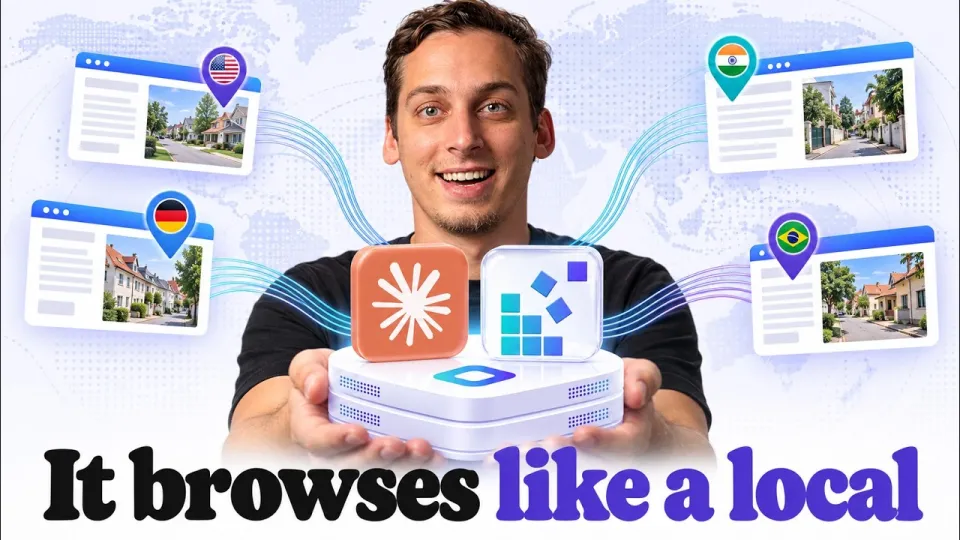
Video: This Claude Code Agent Uses Residential Proxies to Find Hidden Prices
· based on the channel Lukas Margerie
Key takeaways
- Residential proxies route requests via real home ISPs, not data centers.
- They reveal hidden prices by simulating local users in target countries.
- Rotating residential proxies provide fresh IPs for each request.
- Used with AI agents and tools like Playwright for automated scraping.
- DataImpulse offers a leading residential proxy network for such tasks.
Residential proxies are specialized proxy servers that route internet requests through real home internet service providers (ISPs), allowing users to appear as local customers in specific countries. Unlike VPNs that typically use data center IPs, residential proxies use IP addresses assigned to residential devices, which significantly reduces the chance of being flagged or blocked by websites. This makes them invaluable for web scraping tasks, especially when collecting data like hidden regional prices that vary by location.
Residential proxies are essential for accessing geo-targeted content or pricing that companies display differently depending on the visitor's location. For example, streaming services, SaaS platforms, and online retailers often customize their prices or available features based on the user's country. Using residential proxies enables automated agents to scrape these variations accurately by mimicking genuine local users.
Understanding Residential Proxies and How They Work
Residential proxies provide IP addresses from actual home networks, making them appear as legitimate users instead of data center traffic. This distinction is crucial because many websites monitor and block traffic coming from known data center IPs to prevent scraping or fraud. Key features of residential proxies include:
- IPs tied to real home ISPs across multiple countries.
- Ability to rotate IP addresses frequently to avoid detection.
- Support for country targeting by selecting exit IPs from specific regions.
This setup allows scraping tools to bypass geo-restrictions and access content or pricing intended only for users in certain countries.
VPNs versus Residential Proxies: Key Differences
VPNs route all your traffic through a single server, usually based in a data center. This can be problematic for web scraping, as many websites flag and block such IPs. In contrast, residential proxies route each request through a unique IP from a residential ISP, making the traffic appear as coming from real users. The main distinctions:
- VPNs typically use data center IPs and route all traffic through one location.
- Residential proxies use IPs from real home networks and can rotate IPs per request.
- Residential proxies reduce the risk of detection and blocking when scraping.
Because of these differences, residential proxies are preferred for tasks requiring stealth and accuracy, such as collecting regional pricing data without triggering anti-bot measures.
Rotating Residential Proxies and Country Targeting
Rotating proxies change the IP address used for each connection or request, enhancing anonymity and reducing the chance of blocking. Residential proxy providers often allow users to specify the country or even the city of the exit IP. This is critical for gathering data that varies by location, such as SaaS pricing or streaming content availability.
Setting up rotating residential proxies with country targeting involves:
- Selecting a proxy provider that supports residential IPs and rotation.
- Configuring the client or scraping tool to rotate IPs after each request.
- Specifying the desired countries or regions for the IP exit nodes.
This approach ensures the scraping agent appears as multiple genuine users from targeted geographies, enabling comprehensive data collection.
Web Scraping Regional Pricing with AI Agents and Playwright
Combining residential proxies with AI agents like Claude Code and automation frameworks such as Playwright allows for efficient, scalable web scraping of pricing pages. For example, an AI agent can:
- Access pricing pages using residential proxies from different countries.
- Extract pricing and feature information automatically.
- Aggregate and analyze the data to produce a comparative pricing teardown.
Such setups reveal substantial price differences for services like Spotify, Canva Pro, ChatGPT, and Netflix across countries including the US, Germany, Brazil, and India. This automation removes the need for manual checks or VPN switching and provides real-time insights into geo-targeted pricing strategies.
What SaaS and Template Sellers Can Learn from Regional Pricing
Understanding regional price variations is vital for SaaS companies and template sellers aiming to optimize their pricing strategies globally. Residential proxies enable them to monitor competitors' pricing and localize their offers effectively. Key takeaways include:
- Prices can vary widely; for example, Spotify Premium costs $12.99/month in the US but about $1.45 in India.
- SaaS providers may adjust pricing based on market conditions and purchasing power.
- Monitoring with residential proxies helps detect such differences and adapt pricing or marketing accordingly.
This intelligence supports competitive positioning and improved revenue management across diverse markets.
Common Questions About Residential Proxies
Many users wonder about the differences between proxies and VPNs, the reliability of residential proxies, and how to choose the best provider. Typical concerns include:
- How do residential proxies avoid detection?
- What is the benefit of rotating proxies?
- Which proxy services are reliable for web scraping?
Providers like DataImpulse offer robust residential proxy networks optimized for web scraping, providing IPs from multiple countries with rotation and country targeting features.
Useful Links
- Residential proxies by DataImpulse: https://dataimpulse.com/?utm_source=youtube&utm_medium=video&utm_campaign=lukasmargerie
- Claude Code AI agent: https://www.claude.com/product/claude-code
- Playwright automation framework: https://playwright.dev
- Community Discord: https://discord.com/invite/vZxn6wZrDD
- CreatorNTWRK Skool: https://www.skool.com/builderzgym
Conclusion
Residential proxies are essential tools for web scraping tasks that require accessing geo-restricted content or prices. By routing requests through real home ISP connections with rotating IPs, they help bypass restrictions and avoid detection more effectively than VPNs. Using residential proxies with AI agents and automation tools like Playwright enables efficient, accurate collection and analysis of regional pricing data across multiple countries. For those interested in exploring this technology, providers like DataImpulse offer reliable residential proxy networks to get started. This article is based on insights and practical demonstrations from Lukas Margerie's analysis on residential proxies and hidden pricing strategies.
Questions & answers
What is a residential proxy and how does it differ from a VPN?
A residential proxy routes your internet traffic through real home ISP connections, providing IP addresses that appear as genuine residential users. Unlike VPNs, which often use data center IPs and route all traffic through one server, residential proxies offer more localized and less detectable IPs, making them better suited for tasks like web scraping and accessing geo-restricted content.
Why are rotating residential proxies important for web scraping?
Rotating residential proxies change the IP address used for each connection or request, which helps avoid detection and blocking by websites. This rotation simulates multiple real users from different locations, allowing scraping tools to gather data more reliably and anonymously.
How can residential proxies help uncover hidden regional pricing?
Many websites display different prices based on the visitor's location. Residential proxies allow users to appear as local customers in various countries, enabling them to access and scrape these geo-targeted prices automatically without manual VPN switching or physical presence.
Where can I find reliable residential proxies for web scraping?
Providers like DataImpulse offer extensive residential proxy networks with features such as IP rotation and country targeting. These services are optimized for web scraping and can be used in combination with AI agents like Claude Code and automation tools like Playwright to efficiently collect data from multiple regions.
Source: This Claude Code Agent Uses Residential Proxies to Find Hidden Prices · Markdown version